Mithila art foundations
What is Mithila art? Techniques, materials, motifs, and a beginner process
Mithila art, also widely called Madhubani painting, is a folk painting tradition associated with the Mithila region of Bihar and adjoining areas. It developed through household, ritual, and community practice and is now made on walls, paper, cloth, canvas, and other surfaces.
Published 2026-07-26 · Nirala Studio guide
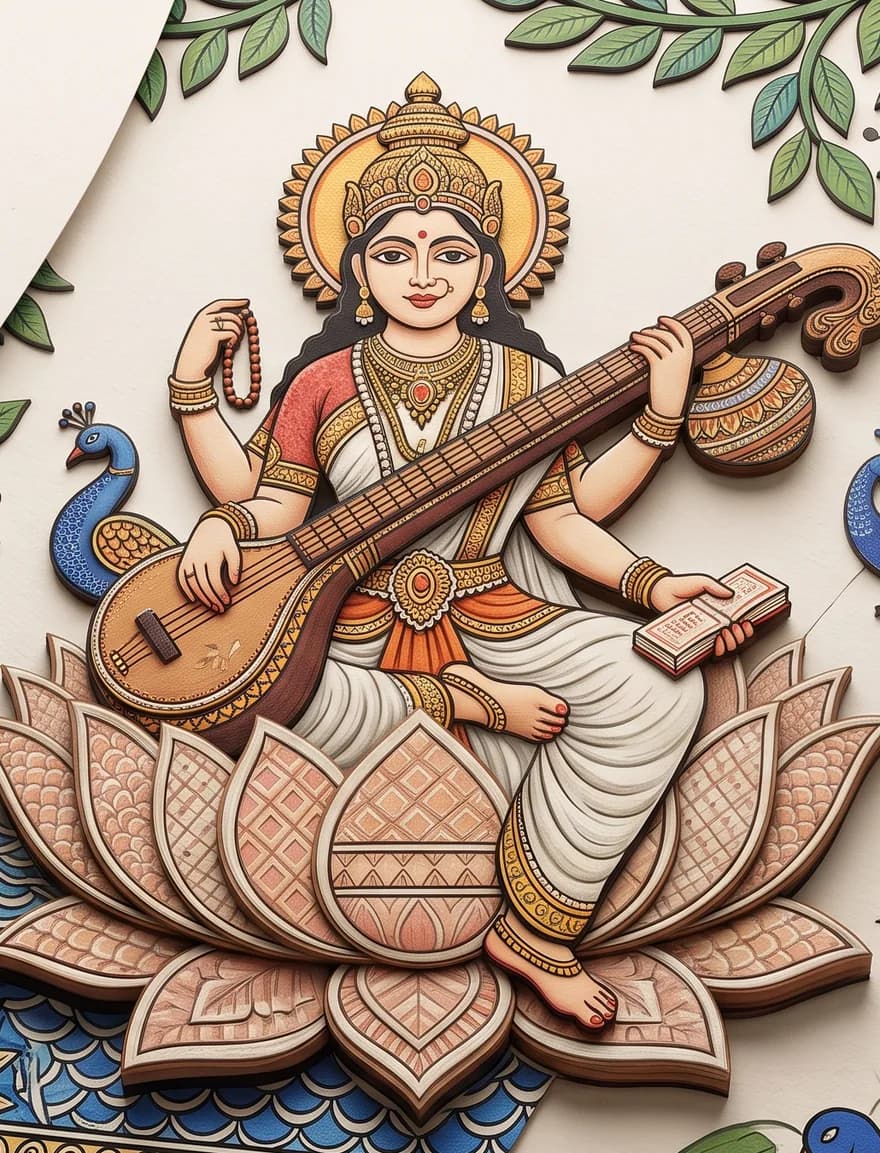
Are Mithila art and Madhubani painting the same?
The terms are commonly used together. “Mithila” names the wider cultural region and tradition, while “Madhubani” is the Bihar district whose name became strongly associated with the painting in public usage. Government craft references describe Mithila painting as also known as Madhubani art.
Where and how the painting was traditionally made
Traditional work was painted on prepared mud walls and floors, particularly around family and ritual occasions. The practice later expanded to handmade paper, cloth, and canvas. Bihar Tourism describes fingers, twigs, brushes, nib pens, and matchsticks among the tools used, historically with natural dyes and pigments.
Kachni, Bharni, and Godhana
Kachni / Katchni
Line-led work using hatching, cross-hatching, stippling, and repeated marks to build tone and texture.
Bharni
Outlined forms filled with areas of color, while retaining the borders and pattern density associated with the tradition.
Godhana
A line-focused visual language connected with tattoo traditions and repeated parallel or concentric patterns.
Spellings vary in English transliteration; Nirala Studio uses “Katchni” in teaching copy while government craft references often use “Kachni.”
What subjects and motifs appear?
Mithila painting frequently draws from mythology, festivals, family occasions, animals, birds, plants, and the wider natural world. Borders and repeated geometric marks are not merely decoration: they organize the picture, connect filled areas, and establish visual rhythm.
Meanings depend on the subject, occasion, community, and artist. A fish, lotus, peacock, sun, or divine figure should not be reduced to one universal one-line definition without that context.
A practical beginner process
- 1
Choose one clear subject
Begin with a manageable central form rather than trying to fill a large sheet immediately.
- 2
Plan the border and composition
Use a light sketch to establish the main figure, surrounding space, and repeated border.
- 3
Create the outlines
Build deliberate contours with a fine pen or brush and keep line weight consistent.
- 4
Select line or color treatment
Use Kachni-style marks, Bharni-style color filling, or a considered combination.
- 5
Fill negative space purposefully
Repeated lines, dots, leaves, and geometric patterns should support the subject rather than hide it.
- 6
Review rhythm and balance
Check that borders, filled areas, and details feel connected before adding final accents.
From sketch to finished painting
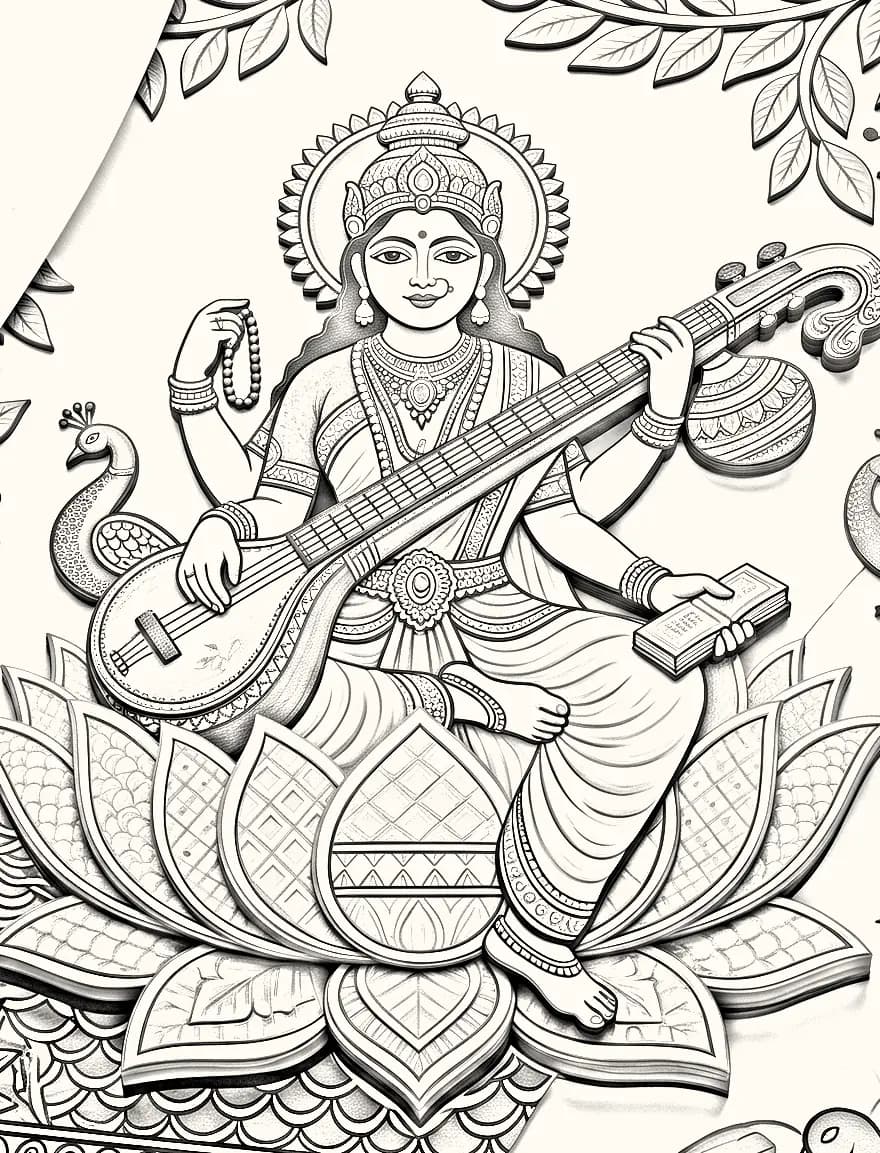
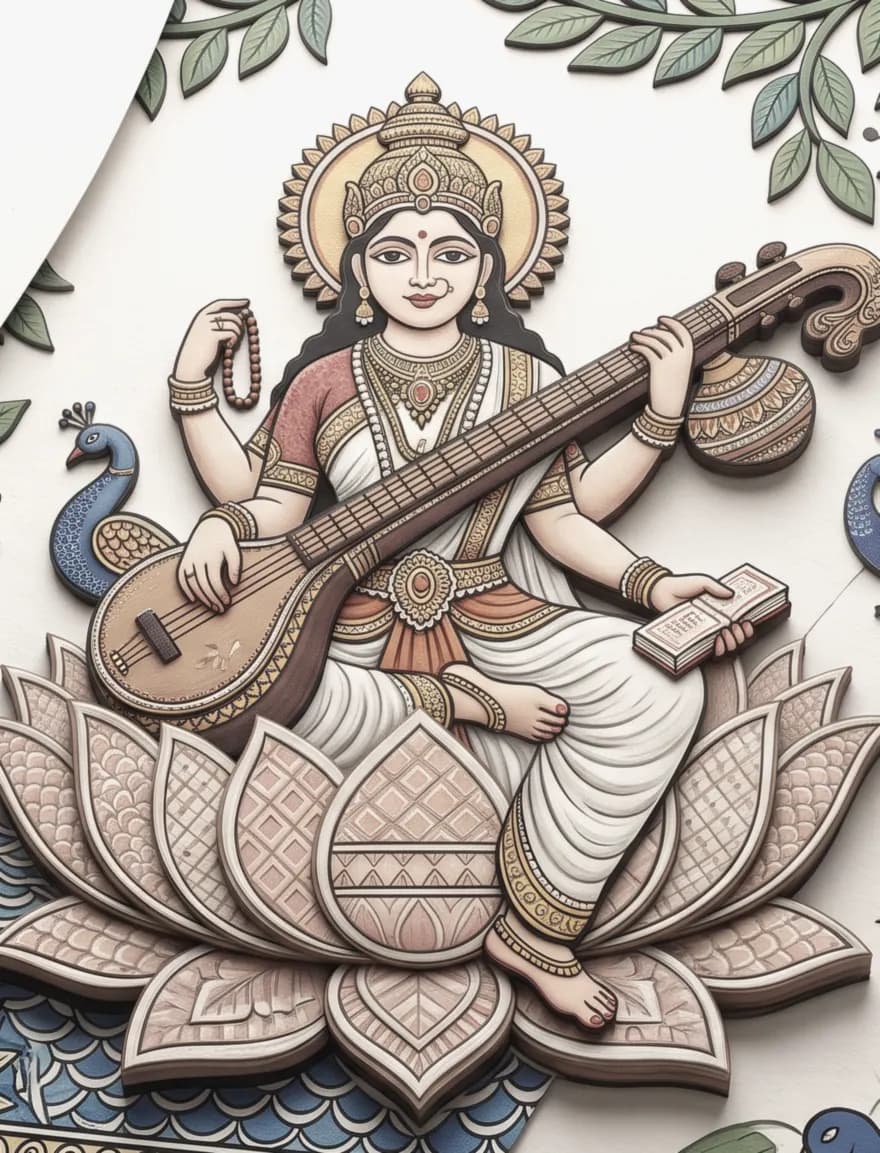
Frequently asked questions
Do beginners need natural pigments?
No. Natural pigments are part of the tradition, but beginners can learn composition and line methods with accessible artist-quality pens, brushes, and colors.
Is tracing required?
No. A light freehand sketch is enough for many beginners. The goal is to understand structure and repeated visual language, not to reproduce one fixed template.
Can Mithila painting be learned online?
The drawing and painting process can be demonstrated online. Nirala Studio teaches live so students can ask questions and receive feedback while they work.
Does every motif have one fixed meaning?
No. Interpretations vary by context, occasion, community, and artist. Avoid treating a short symbol list as a complete account of the tradition.
Learn through a live session
Browse upcoming workshops for current dates and availability, or explore the course catalog for longer learning paths.