Nirala journal · Art & tradition
Chhath Puja- significance and how can we paint it in Madhubani/Mithila art
Explore our culture, tradition of Chhath puja and how to draw it in canvas in Madhubani style .
By Rini-Nirala Studio · 6 min read · 15 November 2026
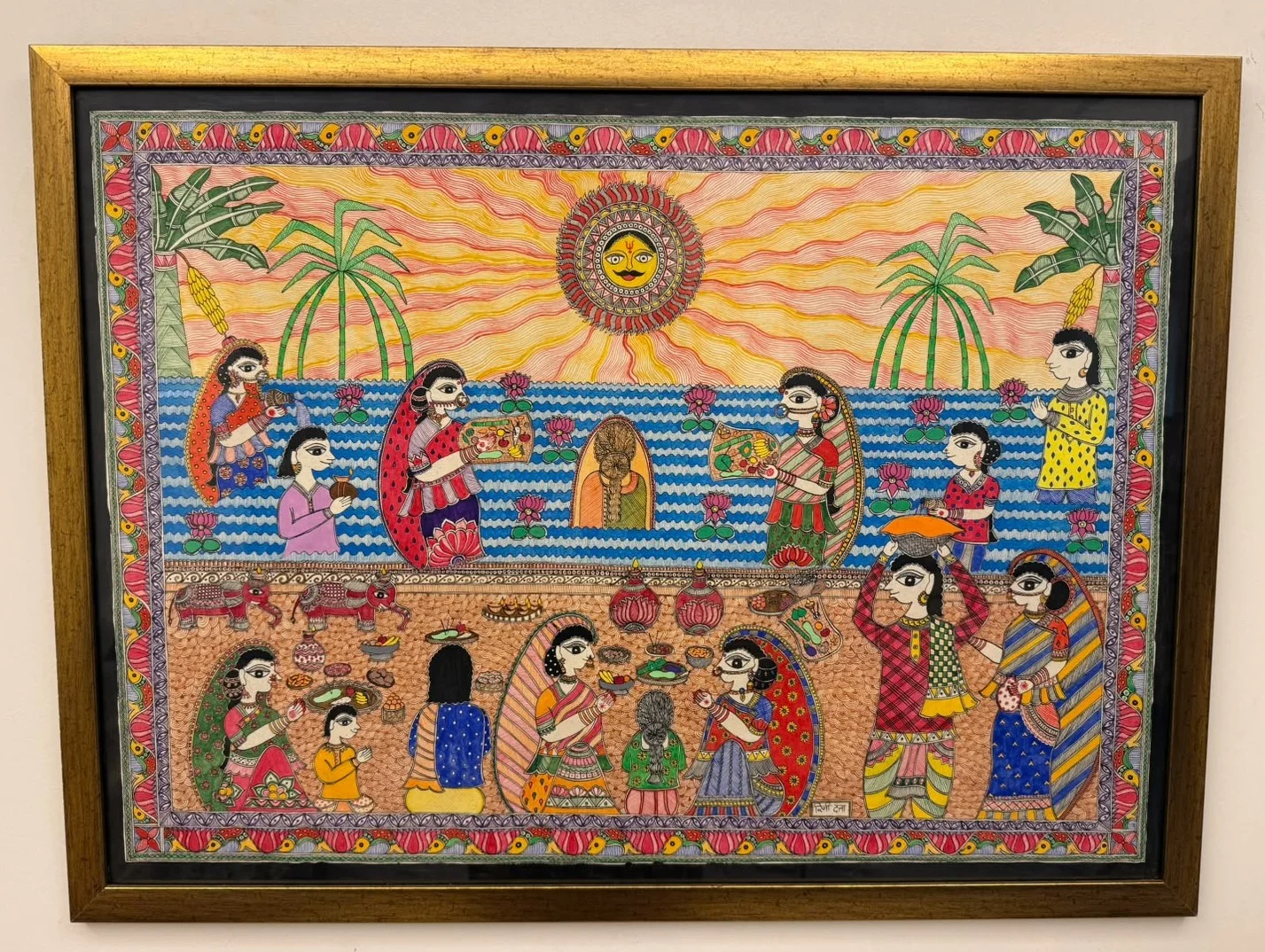
Chhath Puja, also called as Surya Sashthi is a four-day fasting festival dedicated to sun god or Surya Devta and Goddess Sashthi or Chhathi Maiya. Painting a Chhath Puja themed Mithila (Madhubani) painting, depicts the pure essence of culture which Bihar includes. Combined with Mithila art techniques and deep devotion towards the Puja or festival, this theme portrays deep prayer and celebration of Bihar's culture and tradition on canvas.
About Chhath Puja
Celebrated just after six days of Diwali, in the month of Kartika, people observing Chhath Puja expresses gratitude to the nature. Devotees thank the sun, who is the giver of light, warmth, and life and also water, earth and air for sustaining balance on earth.
Unlike other festivals, there are no idols or grand temples. Prayers are offered in the open, standing in rivers and ponds, under the open sky, at sunrise and sunset.
Every offering, from fruits and sugarcane to Thekua made from the harvest, is a simple thank you to nature for food, health and life.
This festival is observed for four days, which includes:
- Nahay-Khay: FIRST DAY, where women take a holy bath to feel clean and pure, then eat one simple, clean home-cooked meal. Khay which means to eat, usually includes one main dish made out of Lauki/Kaddu (bottle gourd) and Bhaat (steamed rice) along with Chana Daal. The food is first offered as prasad.
- Lohanda and Kharna: SECOND DAY, there is a full-day fast without food or water, then in the evening women break the fast with kheer and roti.
- Sandhya Arghya: THIRD DAY, evening, devotees stand in knee-deep water at a river or pond and offer water and prayers to the setting sun.
- Usha Arghya: FOURTH DAY, morning, same devotees offer water and prayers to the rising sun. After this, the long fast ends and they eat food, which is called Paran.
During all these days devotees carry bamboo winnowing trays or soop, filled with traditional offerings like sweet wheat cookies or thekua, seasonal fruits, sugarcane and earthen lamps.
The cultural connection between Chhath Puja and Mithila art
Chhath Puja and Mithila art are intertwined to each other, as they come from the Mithilanchal region of Bihar and its sharing border with Nepal. Both expresses:
Scroll sideways to read all columns.
| CONTENT | CHHATH PUJA | MITHILA ART |
|---|---|---|
| 1. Worship of Nature and the Elements | Chhath Puja is completely dedicated to Surya Dev and Chhathi Maiya, focusing on gratitude for life-sustaining nature, rivers, ponds and the rising and setting sun. | Mithila art draws its core vocabulary from the natural world, featuring the sun, moon, sacred rivers, lotus flowers, fish and sacred trees. |
| 2. Stories behind the rituals | Rituals performed in the Puja is rooted in ancient Vedic practices, legends and nature symbolism. Rather than originating from a single narrative, the four days reflect a blend of stories from Ramayana, Mahabharata and even Puranas, alongside early solar science. | Artists use the art to visually document the exact elements of the Puja wherein devotees are standing waist-deep in water offering Arghya, Soop filled with seasonal fruits, sugarcane and traditional Thekua offerings. |
| 3. Generational women’s tradition | From actively executing meticulous fast to performing all the rituals, all women of the family play the central role on all four days of the Puja. | Mithila art is deeply rooted in domestic spaces and are traditionally passed down from mothers to daughters. |
| 4. Celebrated with art and decoration | During Puja homes and communities are decorated with Mithila art which includes folk motifs with deep meaning behind it. | The art acts as a medium showcasing Chhath Puja in the houses through different Mithila art in courtyards, puja rooms, walls etc. |
| 5. Preserving cultural memory | Often termed as one of the oldest festivals of the country, the four-days of Puja brings members of the family together to celebrate and continue preserving the culture of Bihar to this day. | Exhibitions and cultural movements actively bridge the two traditions by using the art as a medium to archive the folklore, songs, and emotional landscape of Chhath Puja, ensuring the intangible heritage of the festival travels across generations. |
| 6. Amalgamation of traditional and contemporary touch | While the Puja defines the true essence of Bihar’s culture through its beautiful rituals celebrated in the region. | The art has given modern expression to the Puja, ranging from hand-painted sarees worn during the festival to specialized community art projects and public installations help merge the visual language of Mithila art directly with the devotions of Chhath Puja. |
Cultural storytelling through motifs
Mithila art is the best way to convey the stories of this Puja celebrated with rituals and prayers by pairing the documentation of each scenario of the rituals with:
The Radiant Sun, representing the cosmic energy, health and the central deity of the festival.
Fish and Tortoises, signifying fertility, good luck and the purity of living river ecosystems where devotees stand.
Bamboo, symbolizing prosperity and sacred offerings, while Banana Groves representing lineage and the material used to weave the ritual basket.
Lotus and Birds, motifs echo the folk songs that invite nature and birds to witness the devotee's penance.
Beginner’s step by step process to draw Chhath Puja themed composition
Step 1: Gather Simple Materials
- Use thick drawing paper or handmade sheets, so that any medium of paint do not harm the base of the paper.
- Light HB pencil for rough sketching and waterproof black fine liner pen for that traditional double line borders.
- Choose your favorite acrylic, watercolor, gouache or even fine-tip markers to tone up the composition with vibrant colors.
Step 2: Structuring the layout with a Mithila Border
- Draw double parallel lines, leaving a one inch margin along all four edges of your page and draw two parallel lines to create a traditional framing band.
- Add simple motifs to the borders, filling the band area with patterns like triangles, scallops or alternating red and yellow floral dots to give the border frame a distinctive look.
Step 3: Mapping the core elements placement
Lightly sketch the main elements with pencil which includes the Sun God, Devotees and offerings, and sacred river.
Step 4: Choose a beginner friendly style
While going over your pencil sketch with black pen or paint, choose the basic of Kachni for filling the negative space and Bharni for applying bright colors to the elements of your composition.
Lastly, if the above points fascinate you and you are keen to learn more about such themed Mithila art, follow Nirala Studio for new artworks, stories and tutorials. You can also contact us to learn this folk art, commission a handmade piece or bring a little of this timeless folk art into your home.